Ella’s post-scandal harassment
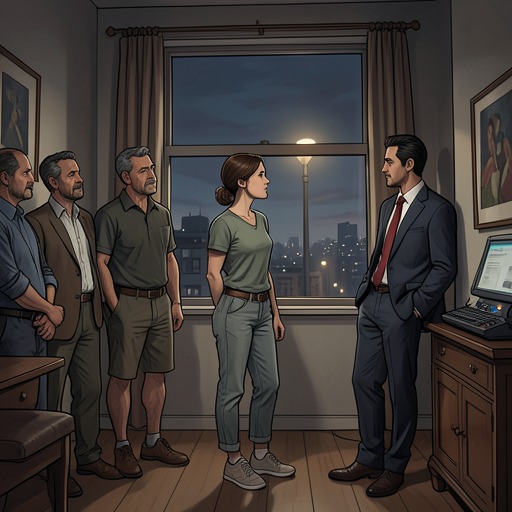
Cinder & EllaElla’s post-scandal harassment is the cascading abuse that follows a false public account of her encounter with Brian Oliver: a story devised to protect his public image and his supposed engagement to Kaylee Summers recasts Ella as a fan receiving a charitable wish. The lie travels from television into inboxes, social media, and school corridors, where strangers and classmates repeat its framing as accusation and insult. Its consequences are not merely reputational: Ella is isolated, publicly degraded for her scars and impaired mobility, and assaulted at school, while the people who care for her try to shield her from further harm.
The public story and its private costs
The harassment grows out of a publicity arrangement that had already treated intimacy as a career asset. When Brian’s team proposed an engagement, it argued that a romance would generate millions in additional publicity without extra cost and would help present him as more mature. Their subsequent public appearances, including a staged dinner with Kaylee at the Ivy, made the supposed relationship legible to photographers and fans as a celebrity romance. The arrangement’s commercial logic mattered later: Kaylee argued that ending it would jeopardize the publicity plan and their careers, while Brian eventually insisted that he had never been truly engaged to her when he kissed Ella.
At the restaurant, cameras interrupted Brian and Ella’s kiss. Ella was without her cloak and gloves; when the photographers’ questions drew attention to her scars, she pulled the cloak back over her shoulders, but knew the pictures would spread before she could get home. Brian tied the cloak for her and held her while she wept. The scene that might have remained a private meeting instead became an image-making event: a crowd and cameras surrounded them, and Ella’s distress and attempt to cover her scars were recorded alongside the kiss.
On television, Brian’s management claimed that he had been working with a charity that grants wishes to seriously ill children, and that Ella was a fan whose wish had been to kiss him. The report also described her as nearly having died in the flames of a car wreck, while maintaining that Kaylee knew about the encounter and supported her fiancé. The story falsely converted Ella’s meeting with Brian into a benevolent celebrity gesture and positioned her as a beneficiary rather than a person with a relationship to him. The broadcast’s consoling charity language sharpened the injury: it made a lie sound like an explanation and concealed who had decided to tell it.
Kaylee then appeared on camera and reinforced the account. She dismissed Ella as “some little girl,” called her a fan, and said Brian had agreed to meet her because he liked her blog. Asked whether she minded that he had kissed Ella, Kaylee presented herself as forgiving, then belittled Ella’s scars and difficulty walking, claiming those were why Brian had carried her. She later called Ella a stalker and threatened her if she came near Brian again. Her performance sustained the false engagement while turning its supposed rival into a target; the language of pity and the language of menace worked together to deny Ella both dignity and credibility.
From screens to school corridors
The falsified account quickly reached Ella’s online life. The next morning, her inbox filled with hate mail from fans of both Brian and Kaylee, who believed that a disturbed stalker had nearly broken up the “perfect” couple. Her blog, Twitter account, and Facebook profile were flooded with cruel comments. The speed of the pile-on carried the television narrative into spaces where Ella had previously expressed herself, making her own accounts channels for abuse rather than connection.
At school, the accusation changed form but remained recognizable. Classmates treated Ella as a liar who had pretended to know Brian, although she had never claimed that they were friends. Juliette, Rob, and Vivian waited for her in the parking lot and walked with her toward the building, confronting students who approached. Their presence kept some people at a distance, but it could not stop taunts and laughter. When Juliette saw what had been done to Ella’s locker, she offered to call their parents so Ella could be excused from school.
The locker had been marked in permanent ink with a string of slurs: “Psycho,” “stalker,” “whore,” “loser,” “freak,” and “cripple,” among others. Ella tried to tell herself the words were untrue and that she had three friends who supported her, but the vandalism still hurt. The episode gives the rumor a physical place in the school: a public surface carrying the same labels that had circulated online, now laid before Ella and anyone passing through the corridor.
The assault and immediate response
The abuse escalated when Ella had to cross the school corridors alone between classes. A group of boys followed her; one called her a freak and kicked her cane out of her hand. She fell, catching herself with her healthy arm and avoiding further damage to her grafts, but her reconstructed hip struck the floor and caused intense pain. A classmate joined in the mockery, asking where Brian was to protect her and repeating that he was with his “real girlfriend.” The taunt made the false public story into a weapon aimed at Ella’s body and her belief that her connection with Brian mattered.
Rob reached Ella and put his arms around her, but after another boy mocked her scars, he let go and attacked the student who had kicked away the cane. The fight lasted no more than thirty seconds, ending only when teachers separated those involved. Rob bloodied the boy’s nose and lip. Rather than first establishing how the confrontation began, the teachers sent all eleven students present to the principal’s office. Rob then kept others from crowding Ella, returned her cane, and helped her stand; her hip hurt too much for her to put weight on her leg, so she had to be carried. The assault thus compounded the humiliation with pain and renewed dependence on assistance.
Exposure, protection, and accountability
Ella’s friends respond with practical solidarity, not a cure for the surrounding hostility. Juliette, Rob, and Vivian accompany her at school, attempt to keep others away, and offer to contact her parents when the locker is defaced. Rob’s intervention interrupts the assault, but it also leads to a school fight and does not erase Ella’s injury or the classmates’ accusations. The protection is real and limited: those closest to her can stand beside her, yet cannot control what the wider school believes or prevent every attack.
Later, Brian rejects the account his management circulated. He tells his publicist that Ella was not a fan, that no charity was involved, and that he was no longer engaged to Kaylee when he kissed Ella. He says the story was invented with Kaylee at a meeting he did not attend, without his knowledge or consent, and against the objection of his personal assistant. Brian identifies the statement as “all trash” and attributes it to his management team’s decision to protect the public narrative, not to Ella’s wishes or the truth of their encounter.
The correction exposes the mechanism behind the harassment but does not undo its immediate damage. Ella has already been made the object of a false charity story, condemned by fans, branded a stalker by classmates, and physically attacked. The contrast is central to the episode: a publicity script designed to safeguard a star’s image transfers the reputational and bodily cost to the less powerful person in the story. Ella’s scars and cane become material for public mockery, while the management statement that should explain the encounter instead intensifies her exposure. The harassment therefore marks the point at which a manufactured celebrity narrative leaves the screen and reorganizes Ella’s ordinary life around suspicion, humiliation, and the need for protection.